
In This Guide
1Best Time to Overseed
Timing is the single most important factor in overseeding success. For cool-season grasses (fescue, bluegrass, ryegrass) — common in the Northeast, Midwest, and Pacific Northwest — late summer to early fall is ideal. Soil temperatures are still warm enough to germinate seed, but air temperatures are cooling down, which is exactly what cool-season grass prefers for establishment. Early spring is a second-best window but comes with more weed competition. For warm-season grasses (Bermuda, zoysia, centipede) in the South, late spring through early summer is the right time when soil temps are consistently above 65°F.
2Preparing the Lawn
Seed-to-soil contact is everything. Before spreading any seed, mow your existing lawn shorter than usual — about 1.5 to 2 inches — and bag the clippings so they don’t smother new seedlings. If thatch is thicker than half an inch, dethatch first with a power rake or dethatching blade. Core aerating before overseeding dramatically improves results by creating small pockets where seed can fall directly into loose soil. Rake the lawn lightly after aerating to break up any plugs and level the surface.
3Choosing the Right Grass Seed
Match your seed to your existing lawn type, your climate, and your yard’s sun exposure. Using the wrong seed type — say, a full-sun Bermuda mix in a shaded yard — will result in poor germination and wasted money. Read the seed label carefully: look for high germination rates (85%+) and minimal weed seed content (less than 0.5%). Turf-type tall fescue is a popular, durable choice for the transition zone. Perennial ryegrass germinates fastest (5–7 days) and is great for quick fill-in. Kentucky bluegrass establishes more slowly but creates a dense, beautiful turf.
4Spreading the Seed
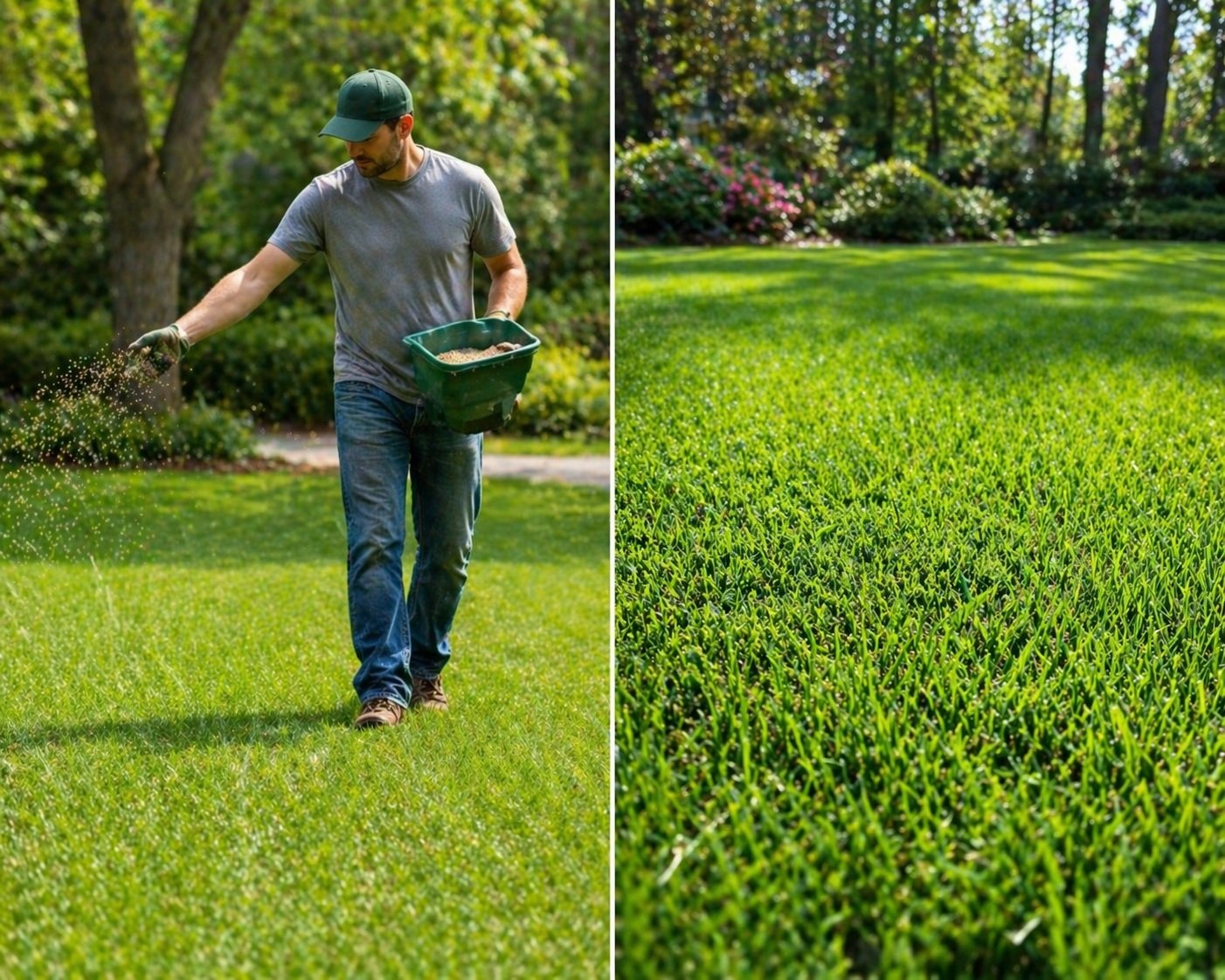
Use a broadcast spreader for large lawns or a handheld spreader for smaller areas. Apply seed in two passes — one north-to-south and one east-to-west — at half the recommended rate per pass. This cross-pattern ensures even coverage and prevents bare strips. After spreading, use the back of a rake to gently work the seed into the soil surface. For thin or bare spots, topdress lightly with a thin layer of compost or peat moss (1/4 inch max) to improve moisture retention around the seed.
5Watering & First Mow
Consistent moisture is critical for the first 2–3 weeks. Water lightly but frequently — two to three times per day for 5–10 minutes each session — to keep the top inch of soil moist without puddling. Avoid letting newly seeded areas dry out completely. Once seedlings reach 3–4 inches tall, reduce watering frequency and increase duration to encourage deeper root growth. Wait until the new grass is at least 3.5 inches tall before the first mow, and never cut more than 1/3 of the blade height at once to avoid stressing young plants.
Final Thoughts
Overseeding is one of the highest-ROI lawn care tasks you can do. Done at the right time with the right prep, it fills thin areas, crowds out weeds, and gives your lawn a noticeably thicker, greener look by the following season.
Ready to Improve Your Backyard?
Browse our recommended lawn care products and grass seed guides.
Browse Guides