
In This Guide
1Signs of Groundhog Activity
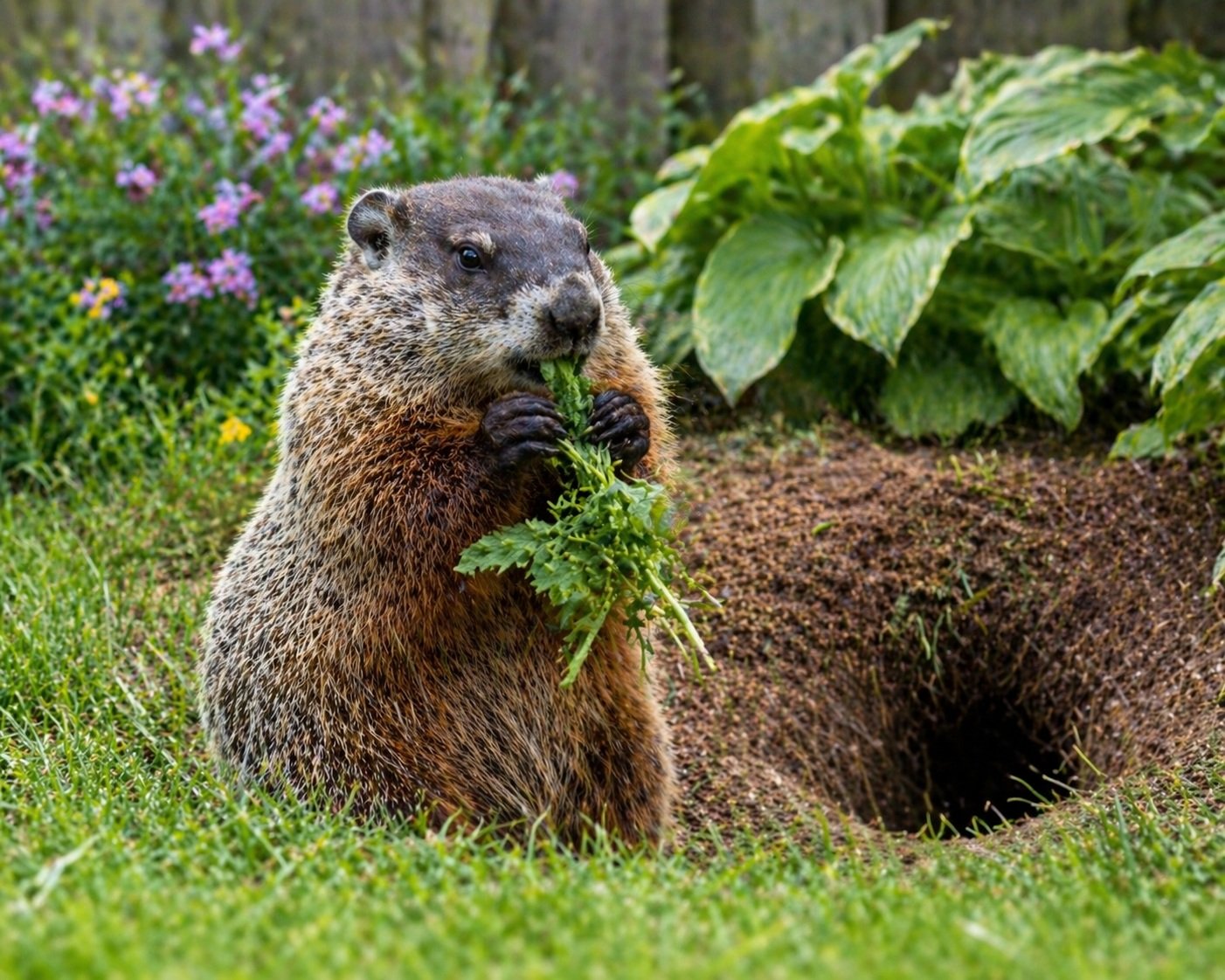
Groundhogs (also called woodchucks) are burrowing rodents that can devastate vegetable gardens, flower beds, and lawns. The most obvious sign is a large burrow entrance — typically 10–12 inches wide — usually located under a deck, shed, fence line, or at the edge of a garden. You’ll also notice clean-cut damage to vegetable plants (groundhogs chew neatly, unlike deer), flattened areas in garden beds, and mounds of loose dirt near burrow openings.
Groundhog tunnels can extend 25–30 feet underground and may have multiple exits. Beyond plant damage, these tunnels can destabilize sheds, decks, and concrete foundations over time.
2Why Groundhogs Target Your Yard
Groundhogs are primarily attracted to yards with easy food sources and undisturbed shelter spots. A vegetable garden is an open invitation — they love beans, peas, lettuce, carrots, and most leafy greens. Overgrown areas near fences or under structures give them safe places to build dens. Once a groundhog establishes a burrow, it’s very difficult to get them to leave on their own.
3Exclusion Fencing
The most reliable long-term solution is a properly installed exclusion fence around your garden. Use a heavy-gauge wire mesh (hardware cloth) that is at least 4 feet tall. The critical detail: bury the bottom 12 inches underground and bend it outward at a 90-degree angle. This L-shaped underground barrier prevents groundhogs from digging under. The aboveground portion should also have an 18-inch section at the top that is not attached to posts, so it flops outward when a groundhog tries to climb it.
4Repellents & Deterrents
Several repellent options can discourage groundhogs from settling in your yard. Granular repellents containing castor oil or predator urine applied around the garden perimeter create an unpleasant scent barrier. Liquid repellent sprays applied directly on plants can reduce feeding damage. Motion-activated sprinklers startle groundhogs and condition them to avoid an area. These methods work best as supplements to fencing, not as standalone solutions.
5Live Trapping & Relocation
Live trapping is effective for removing an established groundhog. Use a large cage trap (at least 10” x 12” x 32”) baited with cantaloupe, sweet corn, or peaches — groundhogs are attracted to sweet, fragrant foods. Place the trap near the burrow entrance and cover it with burlap or grass to make it feel less exposed. Once caught, relocate the groundhog at least 5 miles away in a wooded area away from other homes. Check your local regulations on wildlife relocation before trapping. After removal, fill the burrow with dirt and gravel to prevent new occupants.
Final Thoughts
Groundhogs are persistent, but a combination of good exclusion fencing and prompt trapping when new animals appear keeps them from establishing in your yard. Once their favorite food source and shelter spots are gone, they move on.
Ready to Improve Your Backyard?
Browse our recommended groundhog control products and pest guides.
Browse Guides