
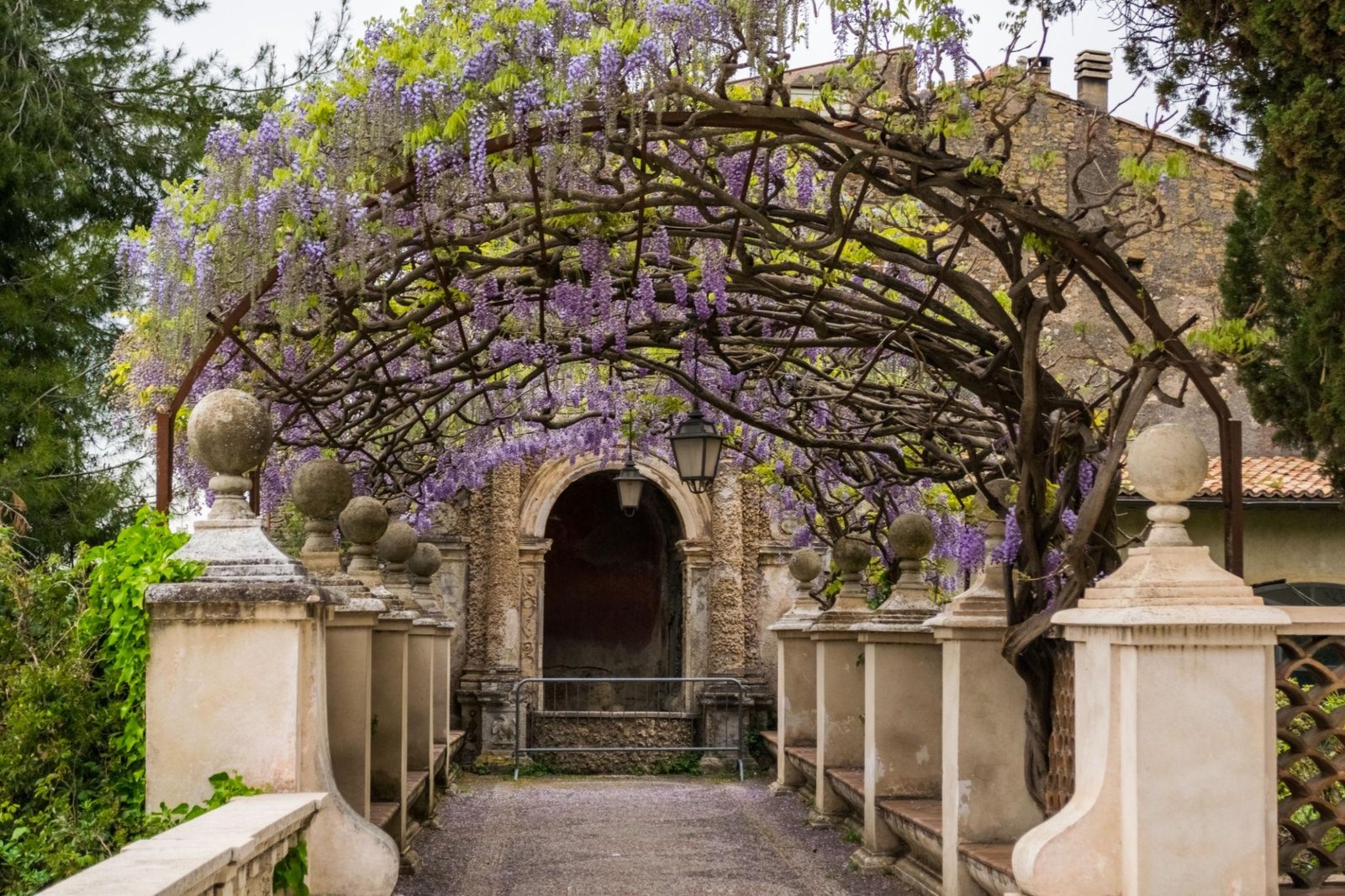
Pergolas feel modern because they fit so naturally into the way we live outdoors today. They frame patios, soften hardscapes, hold string lights, support climbing vines, and turn an ordinary seating area into something that feels intentional.
But the pergola is not a new backyard trend. It is one of the oldest garden structures still in regular use. Long before outdoor kitchens, patio sets, gas grills, and suburban decks, people were using post-and-beam structures to create shade, support vines, and make outdoor spaces more comfortable.
From ancient Egyptian gardens to Roman villas, Renaissance estates, Victorian pleasure gardens, and today's backyard retreats, pergolas have remained popular because they do something very simple and very powerful: they make the outdoors feel like a room.
In This Article
What Is a Pergola?
A pergola is an outdoor garden structure made with upright posts or columns that support an open roof of beams, rafters, or latticework. Unlike a gazebo or pavilion, a pergola usually does not have a fully solid roof. Instead, it creates partial shade and a sense of enclosure while still allowing air, light, and views to pass through.
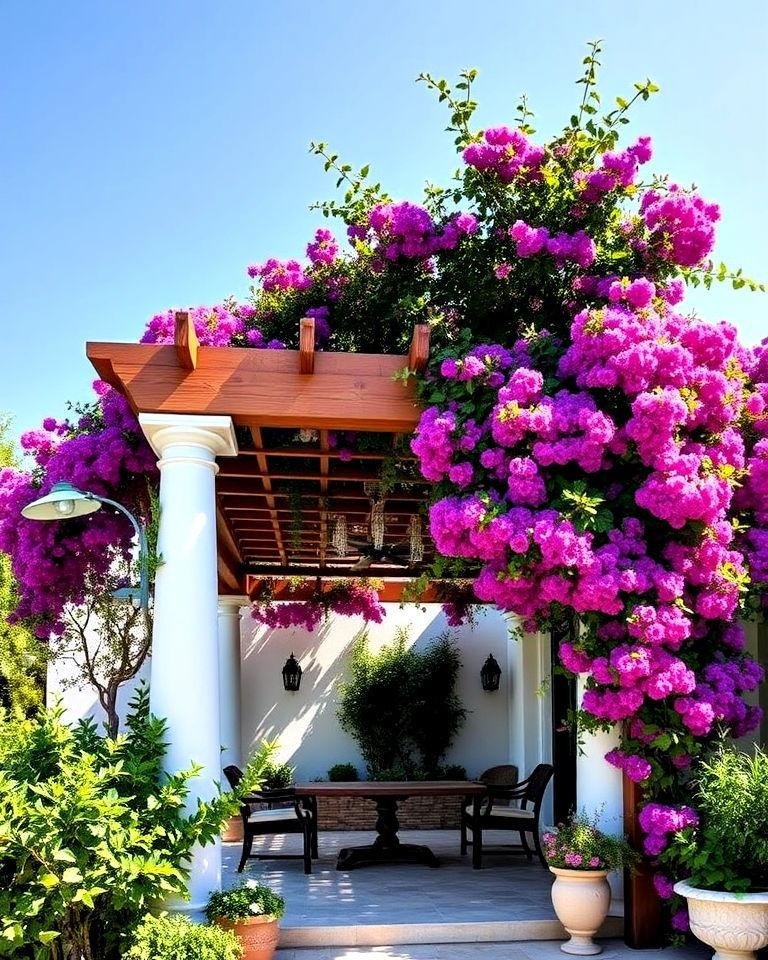
Historically, pergolas were used as garden walks, terraces, vine supports, and shaded sitting areas. Climbing plants such as grapes, roses, wisteria, ivy, jasmine, and bougainvillea could be trained across the top, creating a living canopy overhead. This combination of architecture and plant life is one reason pergolas have endured for centuries.
The word pergola comes through Italian from the Latin pergula, a word associated with a projecting roof, shed, booth, or vine arbor. That origin makes sense because the pergola has always lived somewhere between building and garden. It is not fully indoors and not completely open. It is a transitional space — the kind of place that invites people to slow down, sit, talk, eat, read, or enjoy the shade.
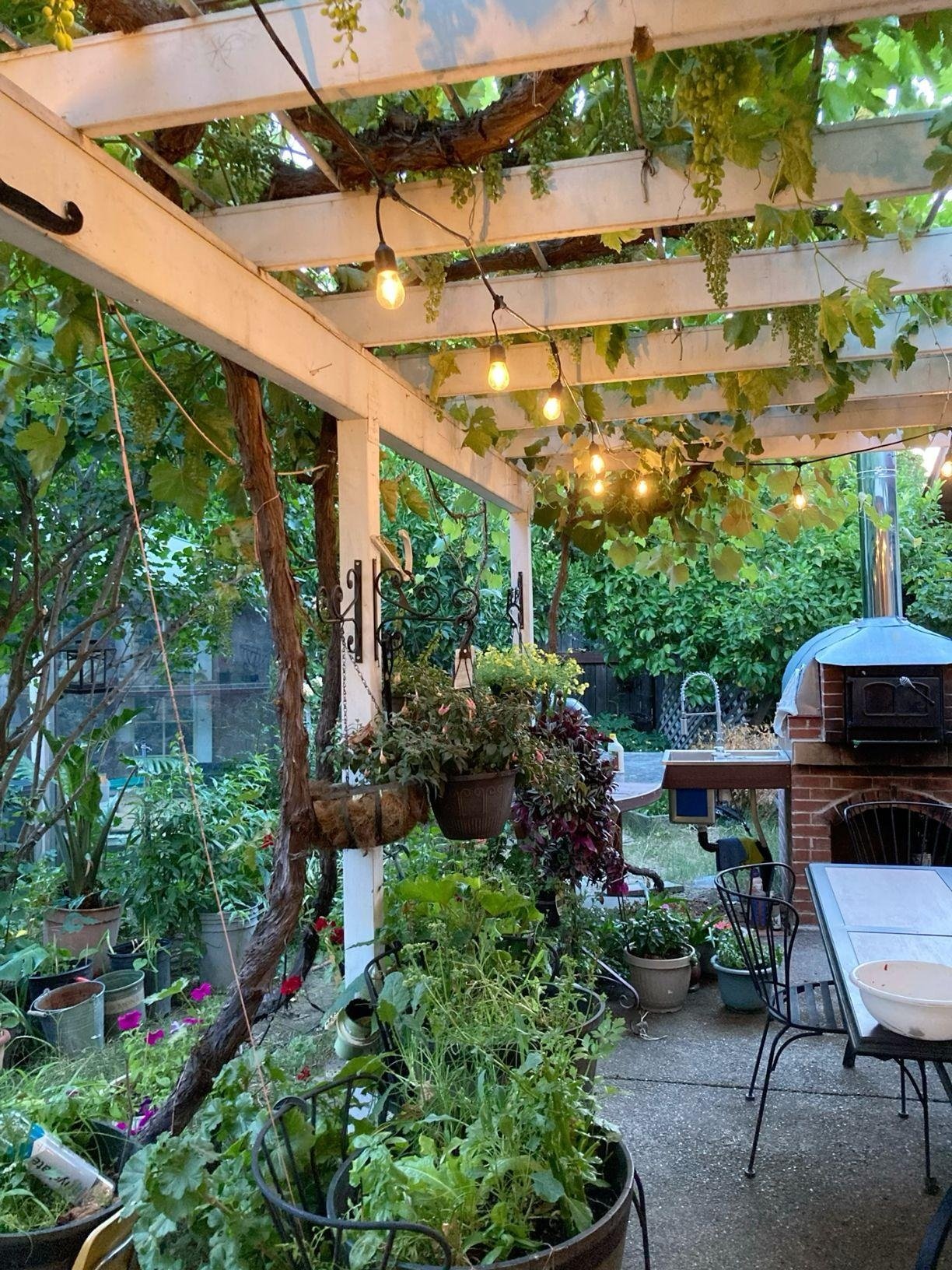
The Earliest Pergolas Were Built for Shade, Vines, and Status
Many garden historians trace pergola-like structures back to ancient Egypt. In a hot, dry climate, shade was more than a luxury. It was a practical necessity. Wealthy Egyptians developed enclosed gardens with pools, trees, vines, flowers, and shaded places for rest. These gardens were not only beautiful; they also signaled wealth and social position.
Early pergola-style structures were often used to support grapevines. The vines provided fruit, visual beauty, and shade. The basic design was simple: posts, crosspieces, and overhead plant growth. Yet that simplicity solved a timeless outdoor problem. It made a sunny garden more livable.
Egyptian garden layouts also reveal something important about pergolas: they were never just about blocking the sun. They helped organize outdoor space. A shaded structure could mark a path, frame a view, create a destination, or separate one garden zone from another. In that sense, pergolas were among the earliest tools of outdoor room-making.
The Romans Turned Pergolas Into Outdoor Living Spaces
The Romans took many garden ideas from earlier civilizations and refined them into a more architectural form. In Roman villas, gardens became extensions of the home. They were places for meals, conversation, walking, reading, and retreating from the heat. Pergolas fit this lifestyle beautifully.
Roman pergolas often supported grapevines and other climbing plants. They could form shaded walkways, cover outdoor dining areas, or connect one part of a villa garden to another. Columns, stone, timber, and vines worked together to create places that were both useful and elegant.
This Roman influence is a major reason the pergola still feels connected to Mediterranean living. Even today, a vine-covered pergola over a dining table immediately suggests warm evenings, garden meals, and relaxed hospitality.
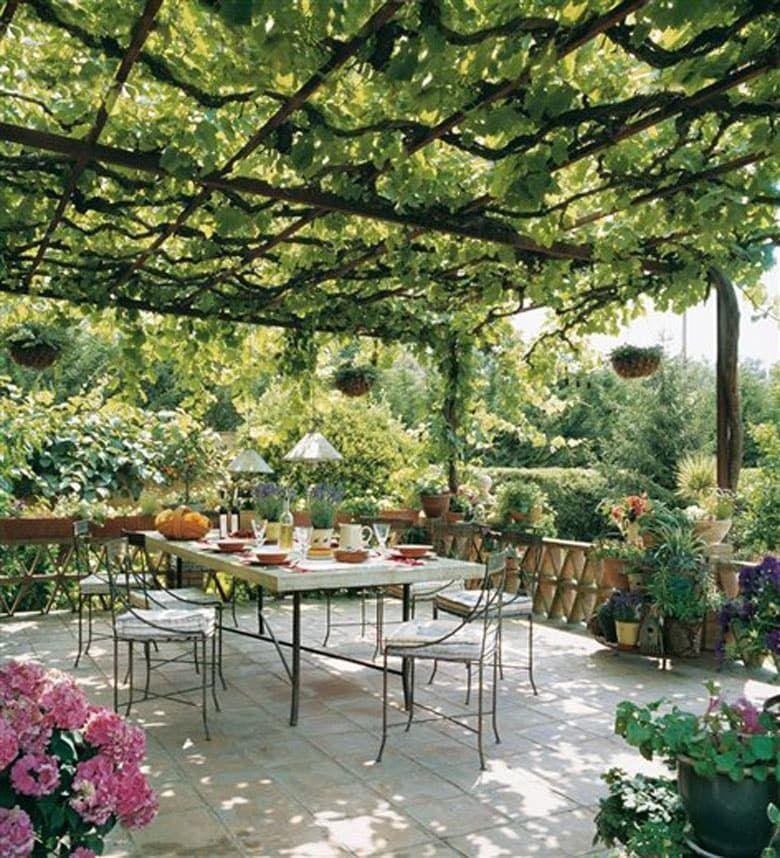
The Renaissance Made Pergolas Elegant Again
After the classical age, pergolas remained part of European gardens, especially in Italy. During the Renaissance, designers revived Roman ideas about symmetry, perspective, proportion, and outdoor beauty. Gardens were planned not only as places to grow plants, but as carefully composed landscapes meant to be experienced from paths, terraces, and overlooks.
Pergolas were ideal for this kind of design. They could create strong lines through a garden, guide the eye toward a view, and turn a simple walkway into a dramatic procession. In Italian Renaissance gardens, pergolas and vine-covered walks helped create structure and rhythm. They gave gardens height, shadow, and movement.
Instead of being only practical supports for grapes or roses, pergolas became architectural features. They could be built from stone, wood, or masonry. They could run along garden walls, frame courtyards, or lead visitors toward fountains, terraces, and scenic overlooks.
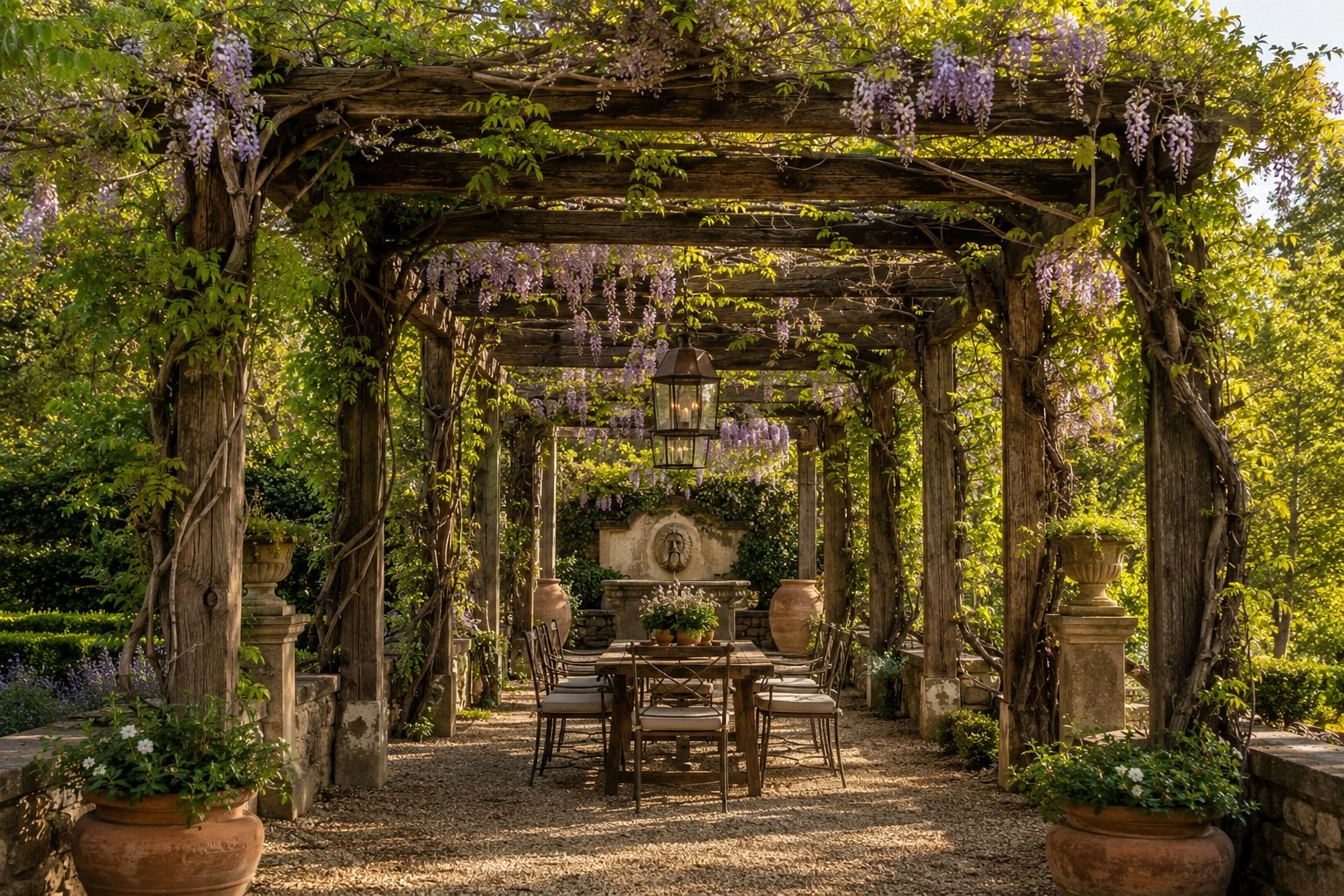
From Estates to Romantic Garden Walks
By the 1800s, pergolas were firmly established in European garden design. In Victorian gardens, they often took on a romantic character. A pergola covered in roses or wisteria could feel like a living hallway, a quiet sitting place, or a scenic transition between garden rooms.
This was also the era when plant collecting, ornamental gardening, and leisure gardens became more popular among the middle and upper classes. Pergolas offered a way to display climbing plants beautifully. The structure itself could be fairly simple, but when draped in flowers, vines, or foliage, it became a centerpiece.
That romantic image still shapes how many people think of pergolas today. Even a modern aluminum or vinyl pergola borrows some of its appeal from the older garden tradition of shade, greenery, and quiet retreat.
Pergolas Come to America
Pergolas became increasingly visible in American gardens during the late nineteenth and early twentieth centuries. As landscape architecture developed in the United States, designers borrowed from English, Italian, and classical garden traditions. Pergolas appeared in estates, public gardens, parks, and eventually residential landscapes.
In early American use, pergolas were often associated with refined garden design. They helped frame entrances, define terraces, cover walks, and support climbing roses or grapevines. In larger homes and estates, they added a sense of permanence and craftsmanship.
Over time, pergolas moved from grand gardens into ordinary backyards. The same idea that worked for a villa or estate also worked for a modest patio: four posts, overhead beams, and just enough structure to make the outdoor area feel special.
Why Pergolas Became Popular in Modern Backyard Design
The modern pergola boom is tied closely to the rise of outdoor living. Homeowners no longer think of the backyard as leftover space behind the house. They see it as an outdoor extension of the home — a place for cooking, dining, relaxing, entertaining, gardening, and spending time with family.
Pergolas are especially popular because they create definition without making the space feel boxed in. A deck or patio can feel bare on its own. Add a pergola, and suddenly that same area feels like an outdoor room. It has edges. It has a ceiling line. It has a purpose.
Modern pergolas are used over patios, dining tables, outdoor kitchens, poolside seating areas, fire pit lounges, walkways, and garden entrances. They can be built from cedar, pressure-treated lumber, vinyl, aluminum, steel, fiberglass, or composite materials. Some are rustic and vine-covered. Others are sleek, black, and modern. Some have retractable canopies, privacy screens, fans, heaters, curtains, lighting, or adjustable louvers.
- They define outdoor rooms.A pergola gives a patio, deck, or garden seating area a clear sense of place.
- They add partial shade.Open rafters soften the sun without completely enclosing the space.
- They support lights and plants.String lights, climbing vines, hanging baskets, and curtains all work naturally with pergolas.
- They fit many home styles.Pergolas can look traditional, farmhouse, coastal, Mediterranean, modern, or rustic depending on materials and proportions.
Modern Pergola Options for Today's Backyard
Ancient pergolas were built for shade, vines, and outdoor comfort. Today's versions carry the same idea forward with aluminum frames, adjustable louvers, privacy screens, rain-resistant roof panels, and integrated lighting.
Featured Pergola Options
Explore EROMMY's full line of pergolas — from simple open-beam structures to motorized louvered systems with built-in LED lighting.
Browse EROMMY pergolas, including basic, louvered, screened, and premium outdoor living options.
A practical adjustable-roof pergola option for patios, decks, and smaller backyard seating areas.
Premium electric louvered pergolas with built-in lighting and side-screen options for outdoor rooms.
Disclosure: Your Backyard Knows may earn a commission if you purchase through affiliate links on this page.
From Vine-Covered Classics to Louvered Modern Pergolas
Traditional pergolas were often designed with plants in mind. A classic garden pergola might be covered in grapes, roses, wisteria, clematis, or jasmine. The plant canopy softened the structure and created deeper shade over time.
Modern pergolas are more flexible. Some homeowners still want that old-world garden feel, while others prefer clean-lined structures with built-in lighting and motorized louvers. A louvered pergola can open to the sun on cool mornings and close for shade or rain protection when needed.
This ability to adapt is one reason pergolas have stayed relevant. They can be simple or luxurious, permanent or modular, freestanding or attached to a house. They can sit over a modest seating area or anchor a full outdoor kitchen. Few backyard structures offer that much range.
The Pergola Through History
Early pergola-like garden structures are used for shade, vines, and outdoor comfort in hot climates.
Roman villas incorporate pergolas into gardens, walkways, dining areas, and vine-covered outdoor spaces.
Classical garden design returns, and pergolas become elegant architectural features in formal landscapes.
Rose-covered and vine-covered pergolas become romantic features in leisure gardens and estates.
Pergolas become more common in American residential landscapes as patios and backyards grow in importance.
Modern pergolas define outdoor kitchens, lounges, pool areas, garden walkways, and backyard entertainment spaces.
Frequently Asked Questions About Pergolas
- Where did pergolas originate?Pergola-like structures can be traced back to ancient gardens, especially in Egypt and Rome, where they were used for shade, plant support, and outdoor comfort.
- What does the word pergola mean?The word comes through Italian from the Latin pergula, associated with a projecting roof, overhang, shed, booth, or vine arbor.
- What were pergolas originally used for?They were originally used to create shade, support climbing plants such as grapevines, and define garden walkways or outdoor sitting areas.
- What is the difference between a pergola and a gazebo?A gazebo usually has a solid roof and a more enclosed shape. A pergola usually has an open roof made of beams or rafters, creating partial shade while keeping the space open.
- Why are pergolas popular in modern backyards?Pergolas are popular because they add structure, shade, beauty, and outdoor-room definition without fully enclosing the space.
- Do pergolas add value to a home?A well-designed pergola can improve outdoor living appeal and make a patio or backyard feel more finished, which may help a home feel more attractive to buyers.
- What plants grow well on a pergola?Common choices include wisteria, climbing roses, grapevines, clematis, jasmine, honeysuckle, and bougainvillea, depending on climate and maintenance preferences.
Why the Pergola Still Endures
The pergola has survived for thousands of years because it answers a timeless need. People have always wanted comfortable outdoor spaces that offer shade, beauty, and a sense of place. The materials have changed. The styles have changed. The accessories have changed. But the basic idea remains almost exactly the same.
A pergola turns open space into usable space. It gives a backyard a destination. It invites plants, light, conversation, and daily life into the garden. Whether built from rough timber and covered in vines or engineered with modern louvers and integrated lighting, the pergola remains one of the most graceful ways to bring structure to the outdoors.
From Ancient Gardens to Modern Backyards
The pergola began as a practical garden structure for shade and climbing plants. Today, it has become a centerpiece of outdoor living — proof that some design ideas are so useful, beautiful, and adaptable that they never really go out of style.