
Few backyard tools are as ordinary, familiar, and quietly important as the lawn mower. It lives in garages, sheds, side yards, and service trailers across America — yet its story begins far from the suburbs, in the factories and manicured grounds of 19th-century England.
Today, a neatly mowed lawn may feel like a natural part of homeownership. But for most of history, an evenly trimmed lawn was difficult, expensive, and often reserved for estates, parks, institutions, and sports grounds. The mower changed that. It made grass easier to manage, lawns easier to standardize, and eventually helped turn the backyard into one of the most recognizable spaces in American life.
This is the story of how the lawn mower was invented, who created it, and how the American lawn became a symbol of pride, leisure, and outdoor living.
In This Article
Before the lawn mower, grass was cut by hand — or by animals
Long before walk-behind mowers and weekend yard work, maintaining a smooth lawn required patience, labor, and money.
In Europe, large open lawns were associated with wealth. A landowner who could keep acres of grass clear and decorative was making a statement: this land did not need to be used for crops, vegetable gardens, or grazing. It could exist simply for beauty, sport, strolling, and display.
That beauty came at a cost. Workers used scythes to cut grass by hand, a demanding skill that required rhythm, strength, and frequent sharpening. On large grounds, sheep and other grazing animals were sometimes used as living lawn equipment. They were practical, but they were not precise. A formal lawn needed a more even cut than animals could provide.
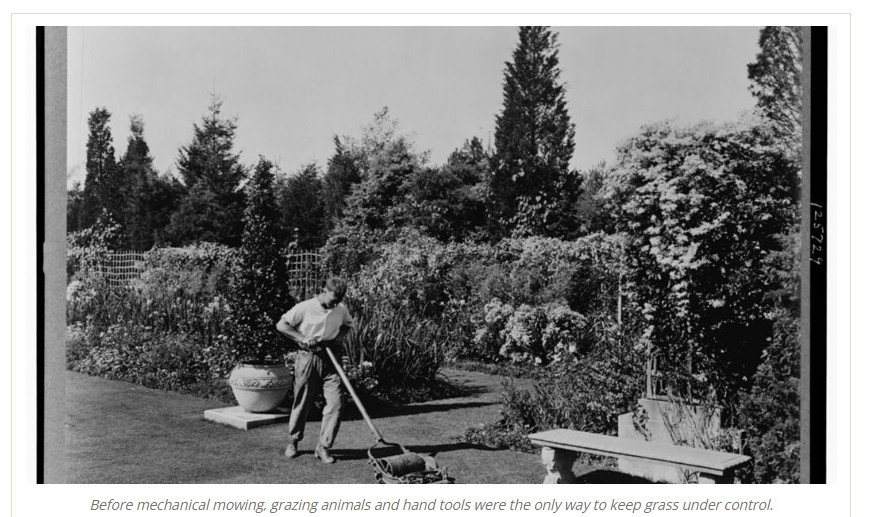
For estates, parks, and early sporting grounds, the problem was obvious: grass needed to be cut more evenly, more reliably, and with less human strain. That need opened the door for one of the most important outdoor inventions of the 19th century.
Edwin Budding and the first lawn mower
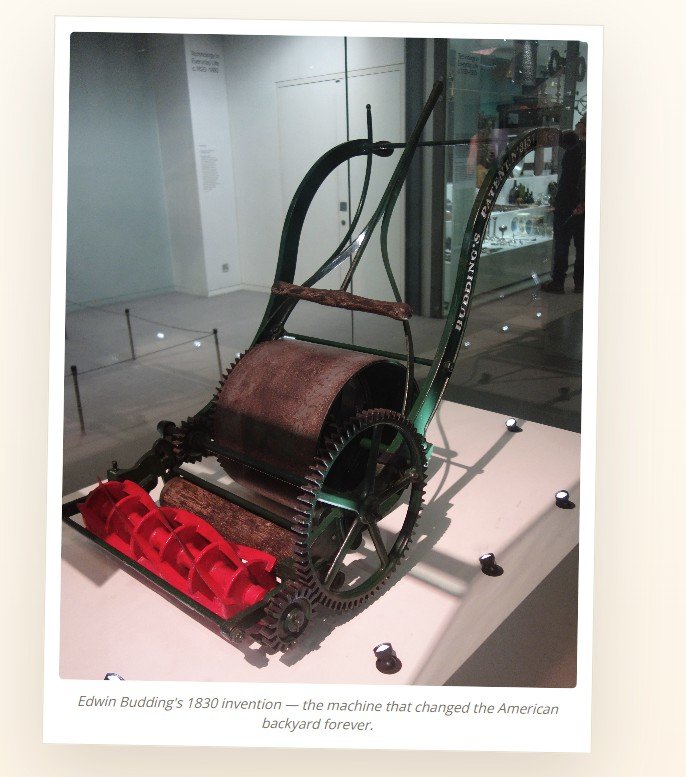
The first practical lawn mower is credited to Edwin Beard Budding, an engineer from Stroud, Gloucestershire, England.
Budding was familiar with industrial machinery, including machines used in cloth mills. One machine used a rotating cylinder fitted with blades to trim the surface of woolen cloth and create a smooth finish. Budding saw the idea differently. If a rotating blade cylinder could shear cloth evenly, why couldn't a similar mechanism cut grass?
In 1830, Budding patented a cylinder-style lawn mower. The early design used a reel of blades mounted in a frame. As the machine moved forward, the wheels and rollers helped turn the cutting cylinder, trimming grass against a fixed cutting bar in a scissor-like motion.
It was not lightweight, sleek, or convenient by today's standards. Early machines were heavy and built of iron. Some needed more than one person to operate comfortably. But the principle was revolutionary. Grass could now be cut more evenly than with a scythe and more predictably than with grazing animals.
The lawn mower began as a clever adaptation of factory machinery — a cloth-finishing idea turned into a grass-cutting tool.
Budding worked with John Ferrabee, who helped manufacture and license the machine. Early mowers were useful for large gardens, parks, and sporting grounds, including the kind of level grass surfaces needed for games such as cricket.
The English lawn becomes easier to maintain
Once grass could be cut more evenly, the lawn became more than a luxury landscape feature. It became a design ideal.
In 19th-century Britain, lawns were important to country houses, public gardens, universities, and sports fields. The mower helped create the smooth, controlled look that became associated with the English landscape tradition. A lawn could frame a home, soften a garden, and create a clean open space for walking, play, and entertaining.
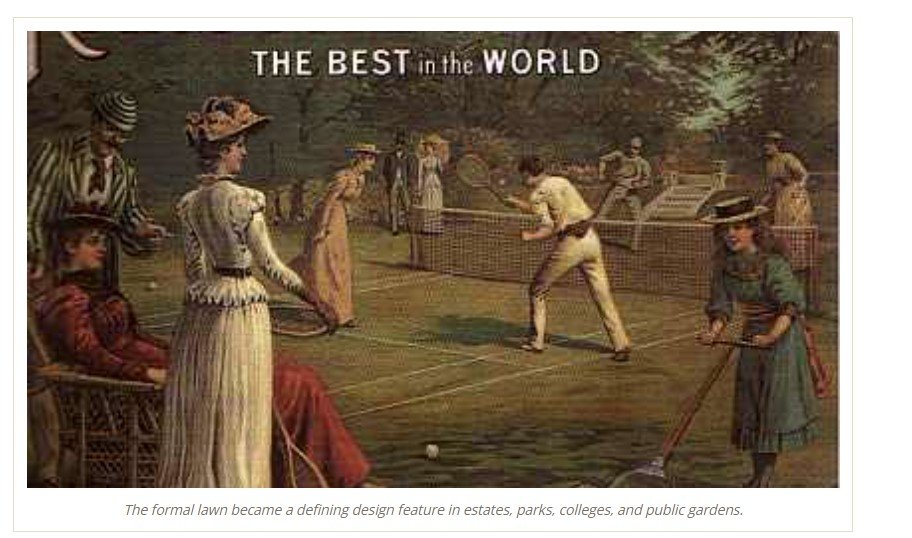
As mower designs improved, the idea of a neat lawn moved beyond the highest levels of wealth. It was still a mark of care and taste, but it was no longer completely out of reach. The lawn mower helped bring the manicured lawn into more public and residential settings.
How lawns became part of the American home
The American lawn did not arrive all at once. It grew out of European garden traditions, public park design, changing ideas about neighborhoods, and eventually the rise of the suburbs.
In the 19th century, American landscape design began to embrace open green spaces around homes, institutions, and parks. The front lawn in particular became a way to present the home to the street. A well-kept lawn suggested order, care, and respectability.
As cities expanded and residential neighborhoods developed, lawns became part of the visual language of domestic life. They created a buffer between the house and the road, provided space for children and family activities, and gave homeowners a visible project to maintain.
Still, lawns were not universal. They required time, water, tools, and sometimes hired help. What truly pushed the lawn into the mainstream was the combination of mass-produced housing, improving mower technology, and the postwar American dream.
The early lawn mower industry takes shape
The first mowers were reel mowers, and the basic cutting principle is still used today.
A reel mower cuts grass with a rotating cylinder of blades that passes against a stationary bed knife. This creates a clean, scissor-like cut. Even today, many groundskeepers and lawn enthusiasts appreciate reel mowers for the crisp finish they provide when used properly.
As manufacturing improved, mower makers focused on reducing weight, improving durability, and making machines easier to push. The lawn mower slowly changed from a specialized estate and groundskeeping tool into a product that could be marketed to homeowners.
- Reel cutting actionA rotating cylinder of blades passes against a fixed bar, creating a clean scissor-like cut.
- Better manufacturingImproved metals, gears, rollers, and frames made mowers more practical over time.
- Homeowner adoptionAs lawns became more common, the mower became a household tool rather than only a groundskeeper's machine.
The suburban boom made mowing a ritual
After World War II, American homebuilding expanded rapidly. With that expansion came the rise of the modern suburban lawn.
Large developments promoted a vision of homeownership built around detached houses, driveways, sidewalks, and green yards. The lawn was not just decoration. It became part of the promise: a safe, orderly place for families, children, pets, and weekend life.
Levittown and similar postwar communities helped make the lawn a national symbol. These neighborhoods showed Americans a repeatable version of the dream: a house, a yard, and a place of one's own. In that setting, mowing became both maintenance and identity.
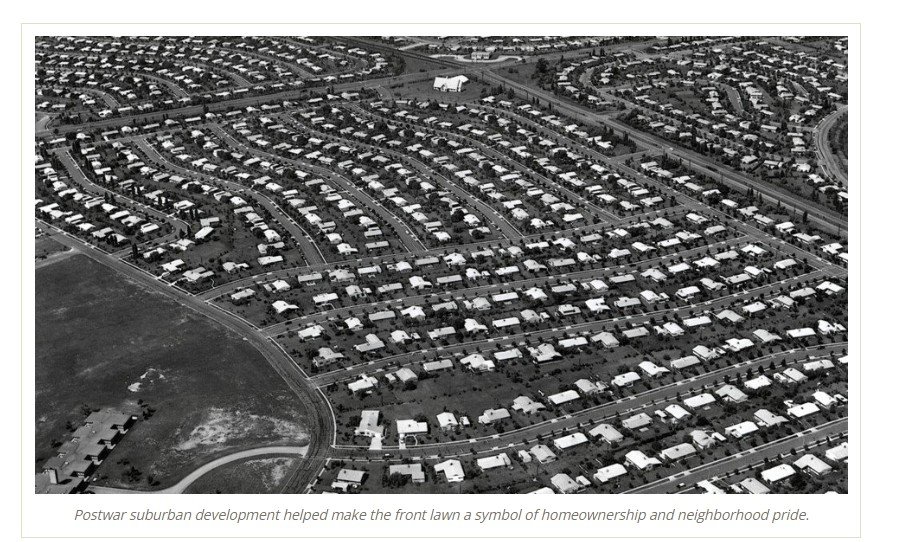
The sound of mowers on Saturday mornings became part of suburban life. A neat lawn could signal responsibility, pride of ownership, and belonging. It also created pressure. In many neighborhoods, grass height and appearance became part of social expectations and local rules.
Gas, riding, and electric mowers changed the job
As lawns grew larger and homeowners wanted faster tools, the mower kept evolving.
Manual reel mowers worked well for smaller lawns, but they required effort and frequent use. Gas-powered walk-behind mowers made the job faster and easier, especially for larger suburban lots. Instead of pushing a blade system entirely by human effort, homeowners could rely on engine power to spin the cutting blade.
Rotary mowers became popular because they were practical for average homeowners. A horizontally spinning blade could handle common lawn conditions and did not require the same precision as reel mowing. Over time, self-propelled models reduced the effort even further.
For bigger properties, riding mowers and lawn tractors changed the experience completely. What once required a long afternoon behind a push mower could become a seated task. Later, zero-turn mowers brought commercial-style maneuverability to homeowners with large yards.
Today's Lawn Mower Options
Best for small, flat lawns. Quiet, low-maintenance, and makes a clean scissor cut.
Shop AmazonPush-button starting, quieter operation, and no gasoline storage. Growing fast in popularity.
Shop AmazonStill common for homeowners who want strong cutting power for weekly mowing.
Shop AmazonScheduled, automated mowing with minimal hands-on work. The future arriving now.
Shop AmazonIn the 21st century, battery-powered mowers gained major ground. Lithium-ion batteries made electric mowing more practical for everyday homeowners — quieter operation, easier starting, and no gasoline storage. For many small and medium-sized yards, they became a serious alternative to gas.
From cast iron to robotic mowing
The newest chapter in mower history is about automation, sensors, mapping, and convenience.
Robotic lawn mowers are part of a larger shift in home technology. Like robotic vacuums indoors, robotic mowers are designed to work on a schedule. Some rely on boundary wires, while newer models use GPS, cameras, sensors, or app-based mapping to manage mowing areas.
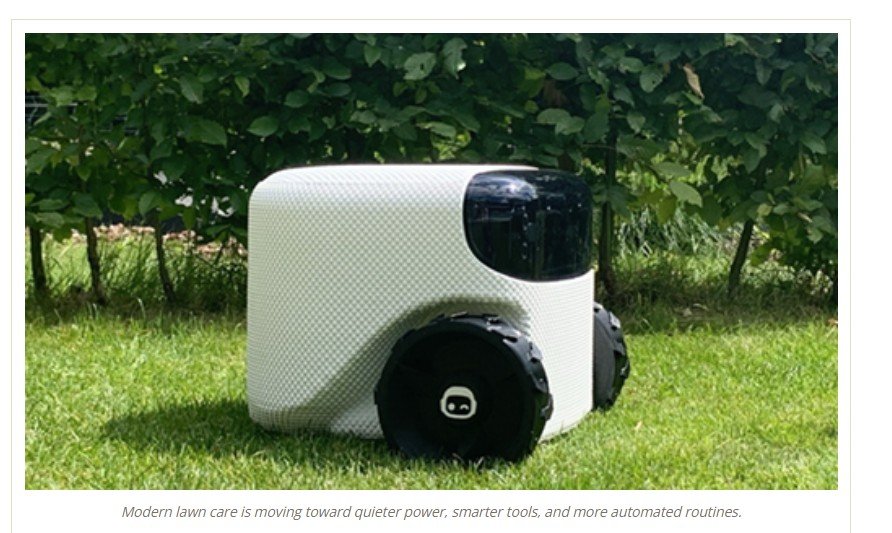
The goal is not very different from Budding's original idea: make grass easier to cut evenly. The technology, however, has changed beyond anything a 19th-century engineer could have imagined.
What once required sheep, scythes, and teams of workers can now be handled by a robotic mower running on a schedule.
Lawn mower milestones
- Pre-1830Lawns are commonly maintained with scythes, hand labor, and grazing animals on estates and grounds.
- 1830Edwin Beard Budding patents the first practical mechanical lawn mower in Gloucestershire, England.
- 1800sReel mowers improve and become useful for estates, parks, sports grounds, and larger homes.
- Post-WWIISuburban housing expansion makes lawns a defining part of American home life and identity.
- Mid-1900sGas-powered rotary mowers become common household tools across suburban America.
- Late 1900sRiding mowers and lawn tractors make larger residential properties far easier to maintain.
- 2000s–TodayBattery-powered and robotic mowers reshape lawn care around quieter, smarter, and more automated tools.
Why the lawn mower matters
The lawn mower did more than cut grass. It helped create the modern idea of a maintained yard. It supported the rise of parks, sports grounds, suburban neighborhoods, and backyard living.
For American homeowners, the lawn became a stage for everyday life. Children played on it. Families gathered around it. Pets ran across it. Garden beds, patios, fire pits, pergolas, and outdoor kitchens were often built around it.
Today, many homeowners are rethinking what a yard can be. Some still love a traditional lawn. Others are reducing turf, adding native plants, building pollinator gardens, or mixing lawn areas with outdoor rooms and low-maintenance landscaping. Even so, the mower remains one of the defining tools of outdoor home care.
From cast iron to artificial intelligence
Nearly two centuries after Edwin Budding patented the first lawn mower, homeowners now have access to battery-powered, GPS-guided, and fully autonomous mowing systems. The machines have changed dramatically, but the goal is still the same: creating outdoor spaces that feel cared for, useful, and ready to enjoy.
Frequently asked questions about lawn mower history
-
Who invented the first lawn mower?
Edwin Beard Budding of Gloucestershire, England patented the first practical lawn mower in 1830. He adapted the idea from a cloth-finishing machine used in textile mills.
-
What did people use to cut grass before lawn mowers?
Before mechanical mowers, grass was maintained using scythes, sickles, and grazing animals such as sheep. Large estate lawns required skilled laborers and significant ongoing effort to keep cut and even.
-
When did lawn mowers become popular in America?
Lawn mowers became increasingly common in the late 1800s, but they exploded in popularity after World War II as suburban homeownership expanded rapidly. The postwar housing boom created millions of new yards — and millions of new mower owners.
-
What was the first type of lawn mower?
The first lawn mower was a reel mower, which uses a rotating cylinder of blades pressing against a fixed cutting bar in a scissor-like motion. This cutting principle is still used in reel mowers today.
-
When were gas-powered lawn mowers invented?
Gas-powered lawn mowers appeared in the early 1900s and became widely used in American households after World War II, when suburban lots made push mowing more common and the demand for faster, easier cutting grew.
-
When was the first riding lawn mower invented?
Riding mowers emerged in the mid-20th century. They became practical consumer products in the 1950s and 1960s, offering homeowners with larger properties a far less labor-intensive way to cut the grass.
Editorial note: Historical background for this article was compiled from public lawn mower history references, including the Science Museum Group, The Old Lawnmower Club, and historical reporting on the American lawn and postwar suburbia.